
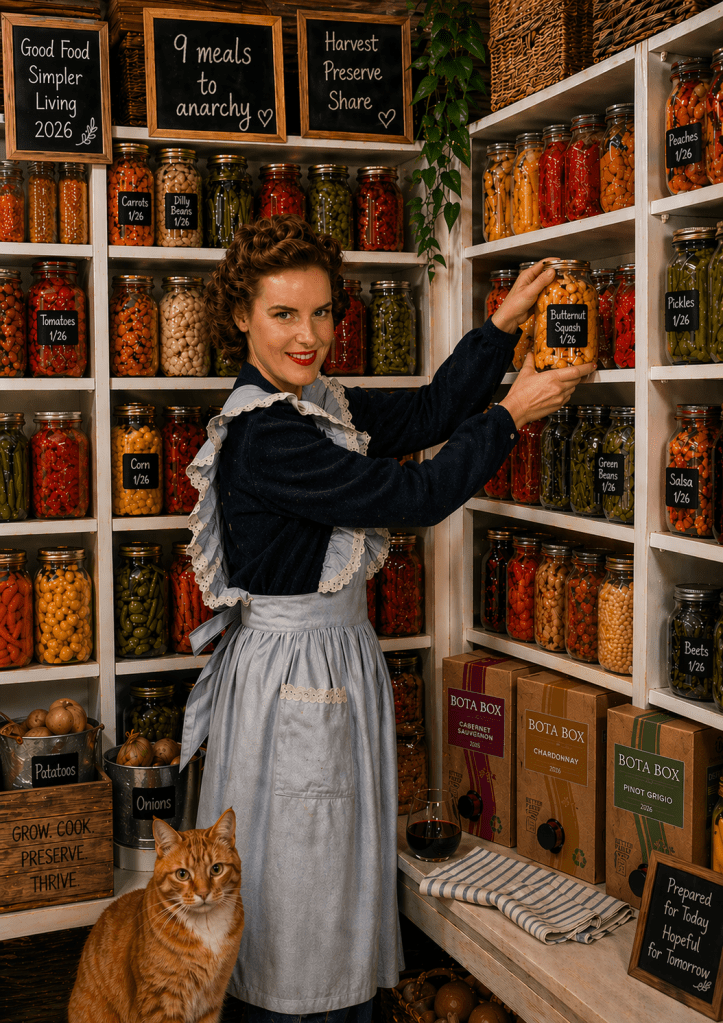
I’ve been thinking about that old line “nine meals from anarchy.” A lot of us have heard it over the years. It actually traces back to a 1906 discussion in Cosmopolitan Magazine, where journalist Alfred Henry Lewis made the observation in the context of labor unrest and economic insecurity.
It’s not scientific. There’s no formula behind it. But the idea has stuck around because it points to something real: how quickly stability depends on basic needs being met.
“Nine meals” was basically shorthand for about three days without reliable food. Not because people starve that quickly, but because uncertainty changes behavior. When people aren’t sure when the next meal—or paycheck, or tank of gas—is coming, psychology shifts fast.
And when you look at how people actually live today, the margins are thinner than we might assume. The USDA reports that roughly 12–13% of U.S. households experience food insecurity in a given year. On the financial side, the Federal Reserve has found that about 35–40% of Americans would struggle to cover a $400 emergency expense with cash or savings. Data summarized by Bankrate shows that roughly half of Americans don’t have enough savings to comfortably absorb a major unexpected cost without going into debt.
There isn’t a single dataset that tracks “days of food on hand,” but the pattern is clear. Lower-income households may have only a couple of days of food available at any given time, while many middle-income households operate on a roughly weekly grocery cycle. Even higher-income households tend to rely more on access than storage. The system works because it’s continuous—not because people are deeply prepared.
That doesn’t mean people are irresponsible—it means modern life is designed around continuous flow, not interruption.
You could apply the same thinking to other basics: income, utilities, fuel, access to stores. When those feel steady, everything works. When they don’t—even briefly—it gets uncomfortable quickly.
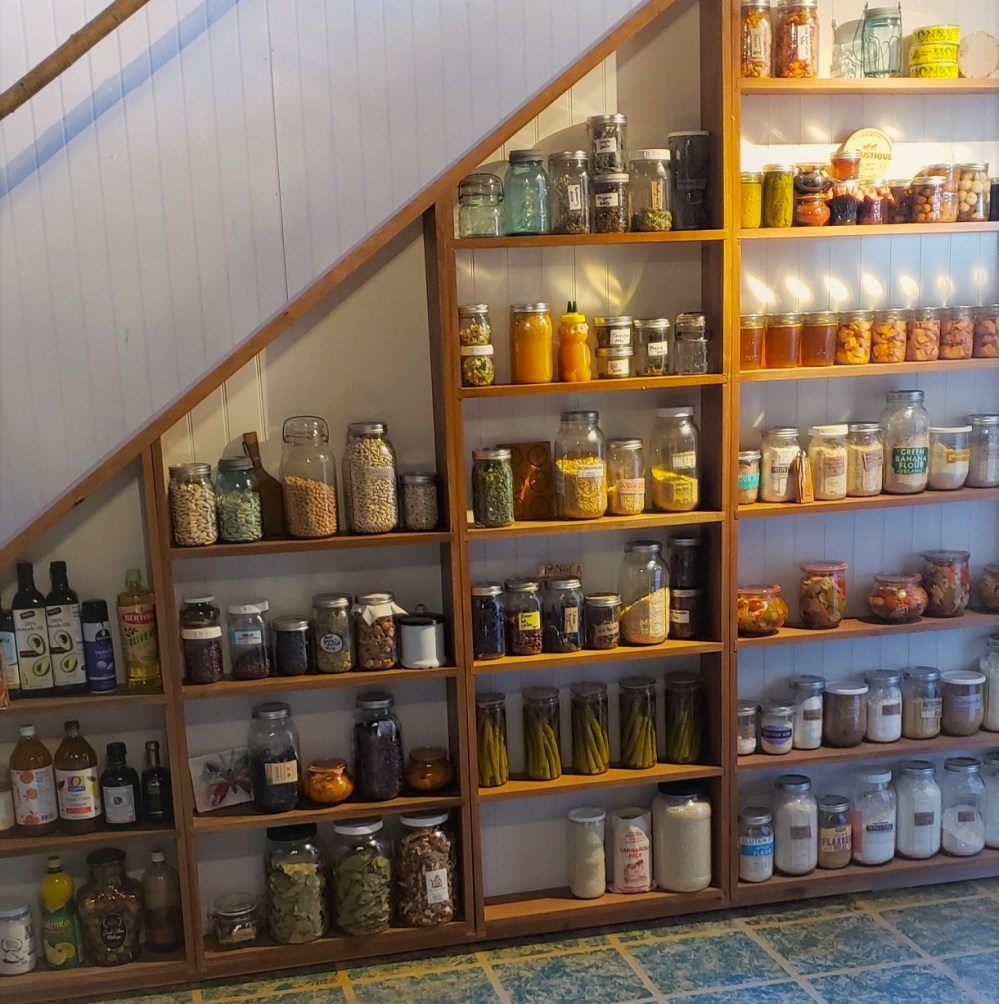
It also lines up with Maslow’s hierarchy. When food, water, shelter, and safety feel secure, people can focus on everything else. When they don’t, priorities narrow fast.
What’s interesting is that research on disasters shows people don’t immediately fall apart. Most communities actually pull together at first. But if disruption lingers and there’s no clear path back to normal, stress and instability build over time.
For me, the takeaway isn’t panic. Perspective is more important. It helps to have a little extra on hand, think through dependencies, and not assume systems are infallible. Call it preparedness, call it being a “prepper,” call it common sense—it’s really just about being a bit more self-reliant and a bit less surprised when things don’t go exactly as planned.
I know my blog isn’t a disaster preparedness site, but it is about harvesting the good life on the homestead and making enough food to help others.
What do you think? What are 3 go-to things in your pantry right now that you could rely on for the next week without going to the grocery store?
Stay briny,
–Stacey

